

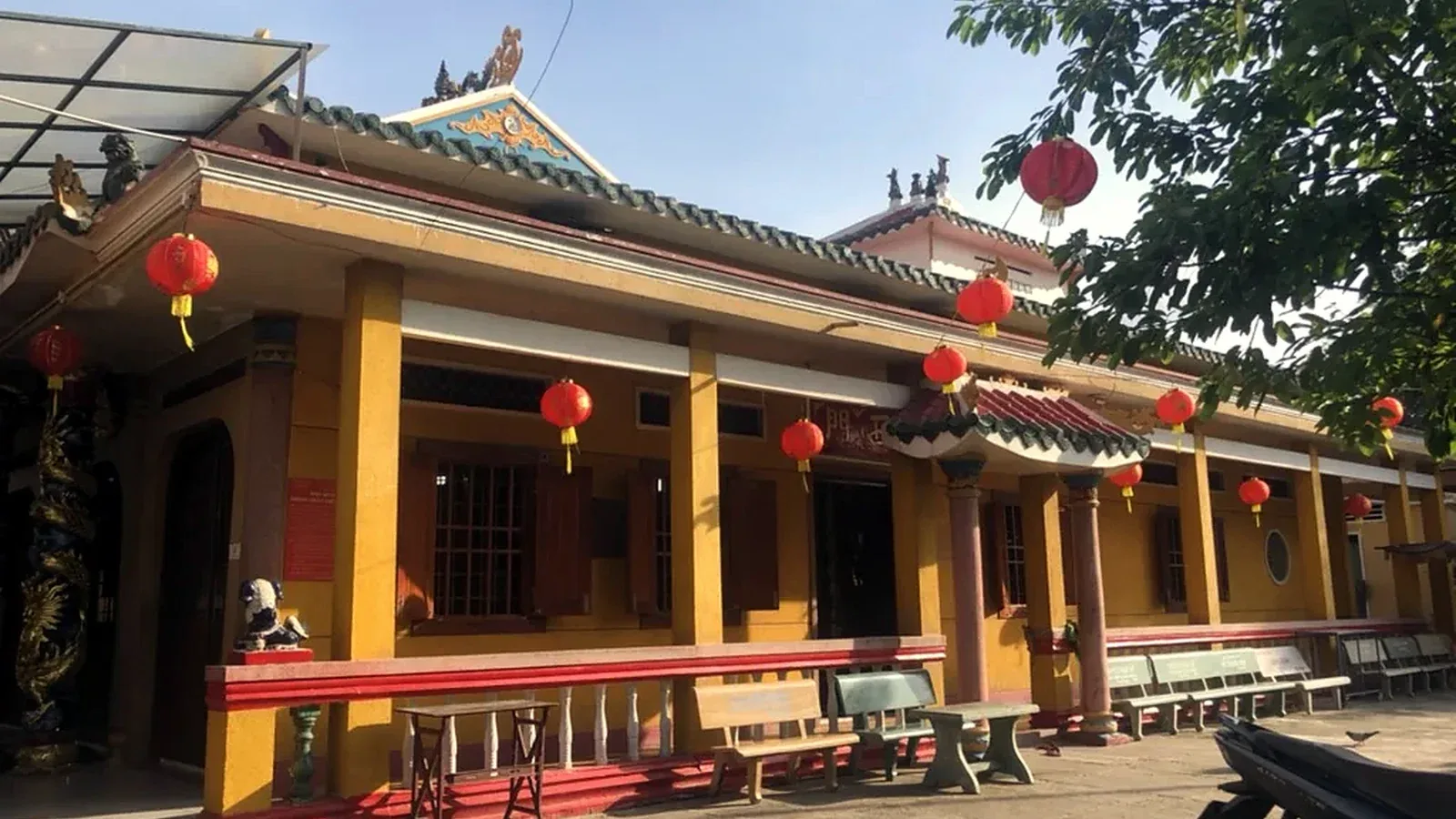
A Southern communal house on the water, reached by boat and held together by ritual, architecture and neighbourhood memory.
Bình Đông Communal House sits in District 8 on an island of about two hectares in the Đôi Canal. It can be reached by boat, which matters: arriving by water makes the place feel connected to the older geography of Southern Vietnam, where canals were routes, borders, markets and lifelines.
The communal house is said to have received royal recognition under Emperor Tự Đức in 1853. Local accounts trace its earlier form to a simple leaf structure more than 150 years ago, used as both a gathering place and a religious site for the surrounding community.
In 1922, it was rebuilt with a tile roof, plank walls and wooden trusses in the style of a Southern communal house. The yard opens toward the canal, with trees, three entrances and a main gate decorated with the familiar image of two dragons and a pearl.
The main hall still holds altars, horizontal lacquered boards and couplets. During the Kỳ Yên festival, held on the 12th and 13th days of the second lunar month, the communal house draws worshippers and visitors from the surrounding region and western provinces.