

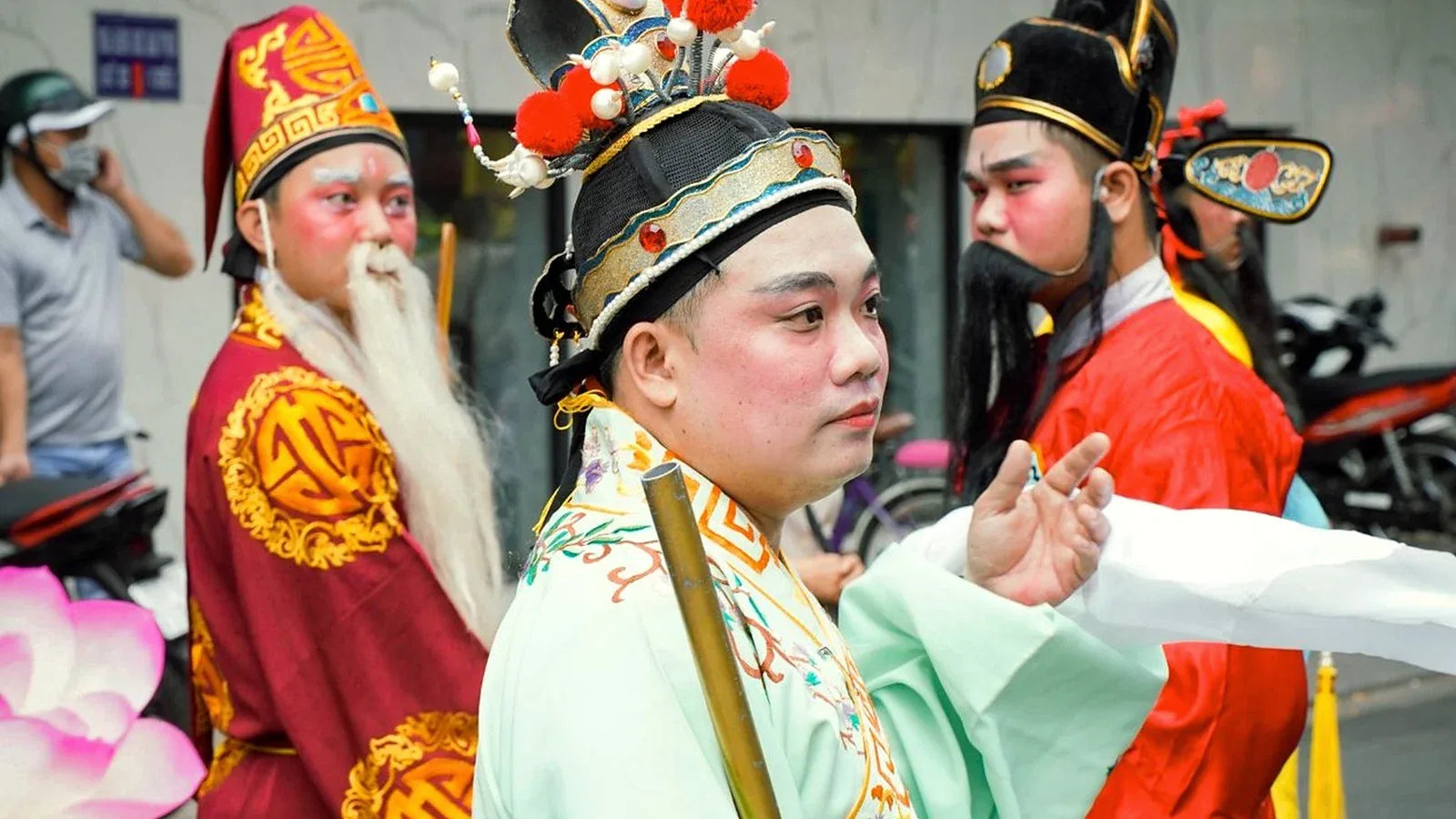
A theatre form of emotion, migration, music and modern Southern Vietnamese identity.
Cải lương is often translated too quickly as renovated theatre or Southern opera, but the form is better understood through feeling. It grew with Southern Vietnam’s modern life: music, melodrama, moral tension, migration, romance and the public appetite for stories sung with force.
In Saigon, cải lương belongs to both stage and memory. Older audiences may associate it with family evenings, radio, television, festival performances, and a sound that can carry longing more directly than ordinary speech.
For visitors, the point is not to understand every word. The point is to notice the structure of emotion: costume, gesture, voice, music and the long-held note that allows grief, loyalty or longing to become public.