

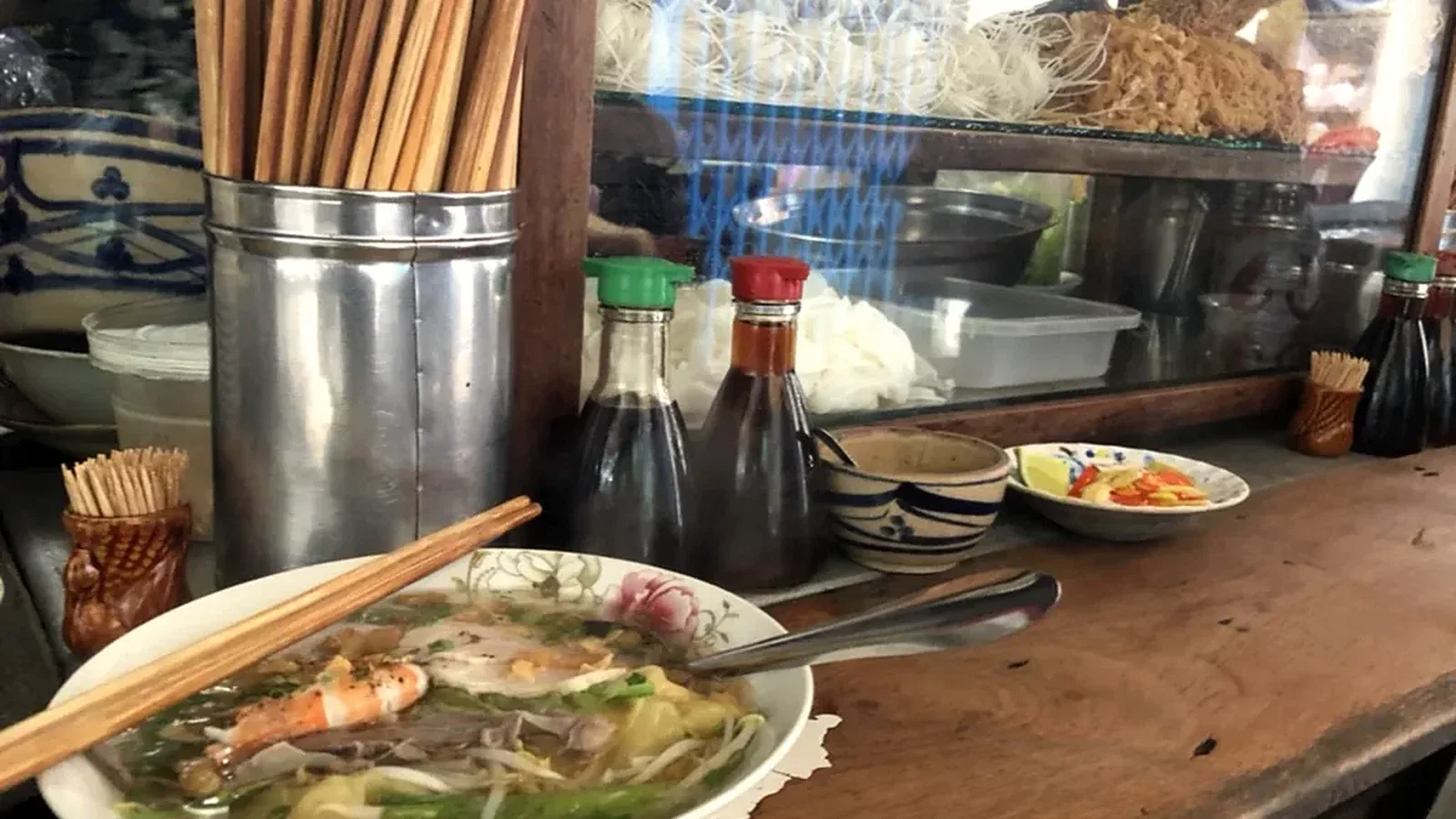
A bowl shaped by Chinese migration, Southern Vietnam trade, and the everyday breakfast rhythm of Saigon.
In Saigon, a noodle bowl is rarely only lunch. Hủ tiếu mì carries a small map of the city: Chinese-Vietnamese shopfronts, pork broth, egg noodles, rice noodles, herbs, fried shallots, and the speed of a morning before work.
The dish belongs to the city’s long habit of absorbing people and techniques without making them disappear. The Chinese origin is still legible in the noodles and broth, while the Southern Vietnamese table changes the rhythm with herbs, lime, chilli, and a lighter, more open style of eating.
A good bowl does not need a grand story. It asks the eater to notice texture: springy egg noodles against soft rice noodles, clear broth against garlic oil, sweetness from pork bones and dried seafood, and the small ceremony of seasoning before the first spoon.