

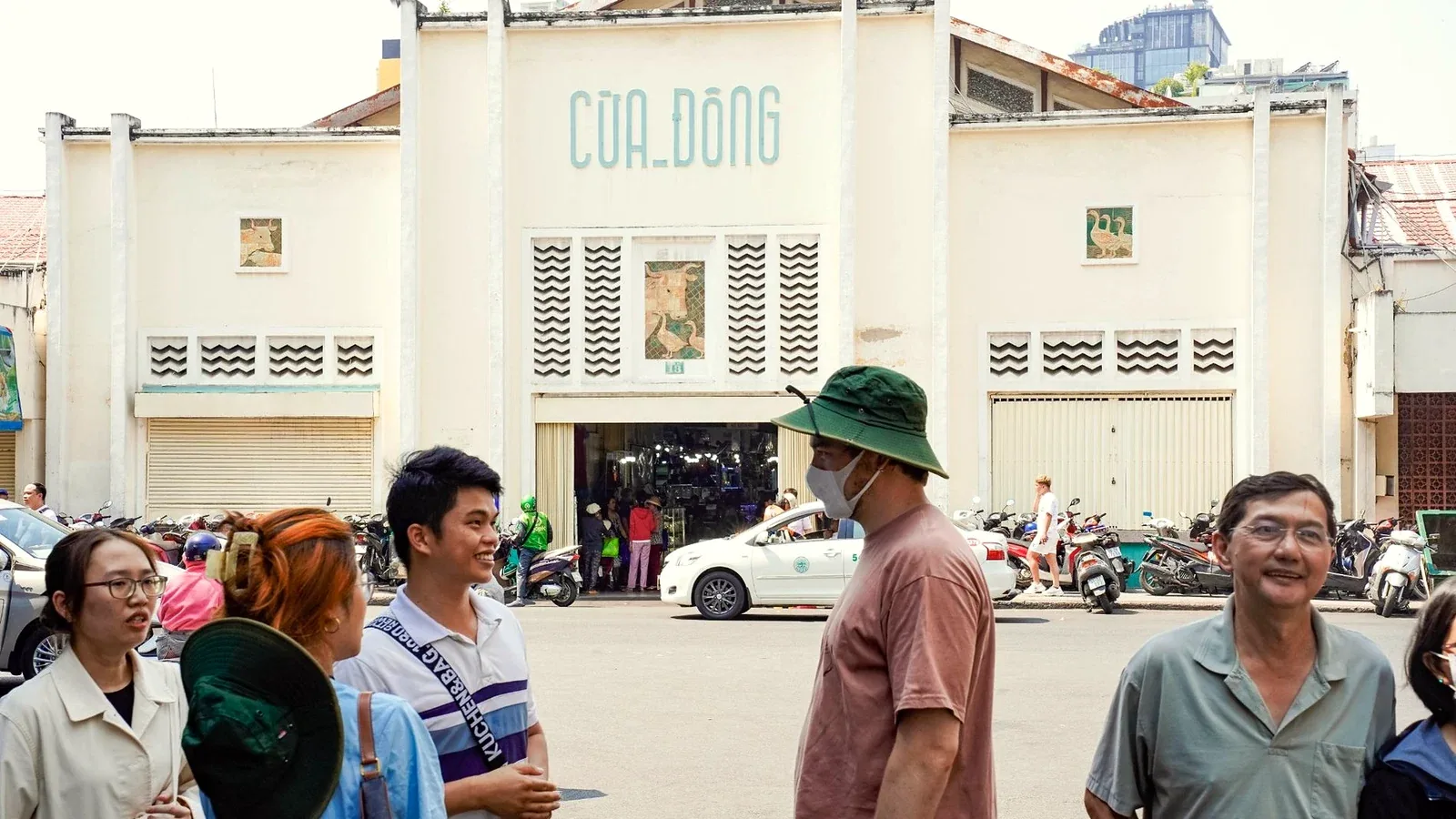
A colonial-era building where art, architecture and city memory sit in the same rooms.
The Ho Chi Minh City Museum of Fine Arts is often entered for its paintings and remembered for its building. Its staircases, tiled floors, balconies and corridors carry the atmosphere of an older Saigon, where private wealth, colonial architecture and public memory overlap.
Moving through the museum is not only a matter of looking at works on the wall. The building itself frames the experience. Light falls through shutters, rooms open into verandas, and the city outside keeps pressing in through windows and balconies.
For visitors trying to understand Saigon, the museum is useful because it resists a single reading. It is beautiful, uneven, quiet in places, worn in others, and full of the kind of layered evidence that makes the city more interesting than a clean historical summary.