

Bến Thành is tourist-facing, but it is not empty. Read beside Tôn Thất Đạm, it becomes a useful lesson in food memory, market habit and the older commercial layers of central Saigon.
Bến Thành Market is too famous to approach innocently. It is on postcards, visitor itineraries, taxi routes and first-time visitor lists. It has also been simplified so often that many travellers arrive already half disappointed: too touristy, too central, too photographed, too easy.
That reaction misses the point. Bến Thành is not useful because it is untouched. It is useful because so many versions of Saigon meet under the same roof. Tourism, bargaining, old food businesses, spice counters, souvenir stalls, office workers, first-time visitors and long-running family shops all occupy the same commercial stage.
The food stalls are not just a visitor convenience
For many Saigon locals, Bến Thành still carries a strong food memory. The market has been reshaped by tourism, but its eating section is not merely an add-on for visitors. Some stalls have been known for years, and the appeal is not only nostalgia. It is also concentration: a tight collection of tastes, routines and vendor identities in the middle of the city.
This is why Bến Thành should not be dismissed too quickly. A visitor who only sees inflated souvenir prices will miss the older logic of the market. Food keeps part of that logic alive. It pulls the place back from pure performance and reminds you that a famous market can be both tourist-facing and locally remembered at the same time.
Curry, Indian Saigon and the market as a trace archive
Two small references open a larger story: Anh Hai curry and Bà Tám curry. They matter because they connect Bến Thành to more than Vietnamese market culture. They also touch the Indian layer of old Saigon: the South Indian, especially Tamil, presence that followed colonial-era movement, trade and religious life into the city.
This is where Bến Thành becomes more interesting than a standard market stop. A curry counter is not only a place to buy spice. It is a clue. It points toward the Hindu temples of central Saigon, toward foodways that moved through Indian, Malay, Cambodian, Thai and Southern Vietnamese routes, and toward the fact that Saigon became an international city earlier than many visitors assume.
That does not mean every flavour has a single origin. Southern Vietnamese food has always absorbed, adjusted and localized. The point is not to force a neat lineage. The point is to notice that markets often preserve traces of movement long after the communities that shaped them become less visible.
Why Tôn Thất Đạm changes the reading
The strongest way to read Bến Thành is not to stop at Bến Thành. It becomes clearer when placed beside Tôn Thất Đạm, the older Saigon market often remembered locally as chợ nhà giàu , the “rich people’s market.” The phrase sounds contradictory when you first see the place. It can feel almost like a street-side wet market, compressed and a little disorderly, rather than an elegant market for the wealthy.
That contradiction is exactly the point. Traditional markets in Vietnam are often conservative in layout and habit. Once buyers and sellers know where things are, once relationships are formed, once the rhythm works, the market resists being redesigned for visual tidiness. People do not necessarily want a market to look new. They want it to function in the way they trust.
So in the middle of a central business district that has been heavily cleaned up, redeveloped and polished, Tôn Thất Đạm still holds a rougher commercial memory. It is not rough because it is poor-quality. Quite the opposite: part of its reputation comes from the quality of what is sold there. The surface looks informal; the value system is exacting.
What Bến Thành is still good for
Bến Thành teaches a useful discipline: do not confuse tourism with emptiness. Some places become tourist sites because they lost all local meaning. Others become tourist sites because they have been meaningful for so long that they cannot avoid being packaged. Bến Thành sits in that tension.
Read slowly, the market shows how Saigon performs itself in public. Vendors move between languages. Prices shift through negotiation. Food stalls keep reputations. Spice counters preserve fragments of migration. Visitors become part of the theatre whether they intend to or not.
The better question is not whether Bến Thành is authentic or inauthentic. The better question is what kind of city exchange it reveals. Commerce, memory, tourism and habit all share the same aisles. That mixture is not a failure of Saigon. It is one of the ways Saigon works.
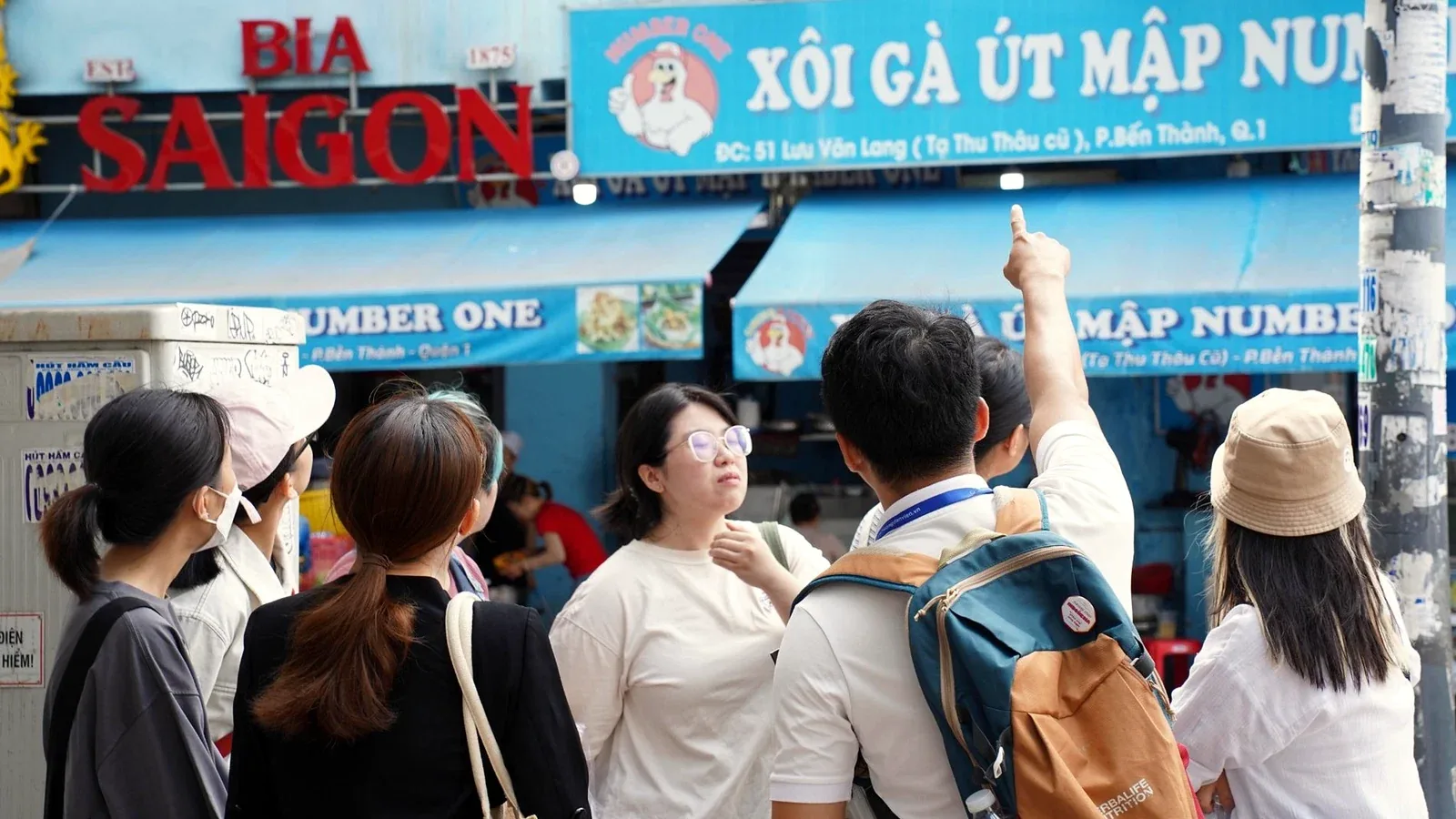
On our Saigon Market to Market: Food, Trade & Street Life walk, Bến Thành works best after Tôn Thất Đạm. The contrast lets you see central Saigon through two market logics at once: the visible landmark and the older buying habit that still survives close by.