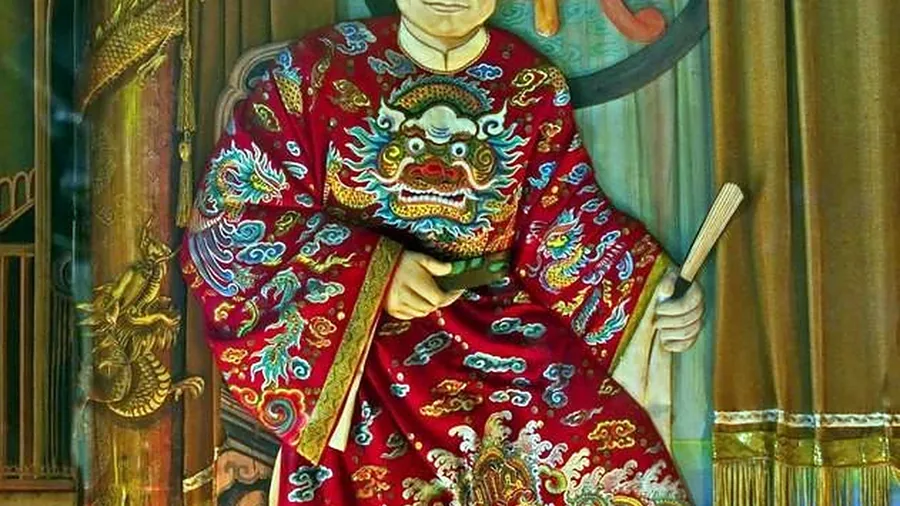

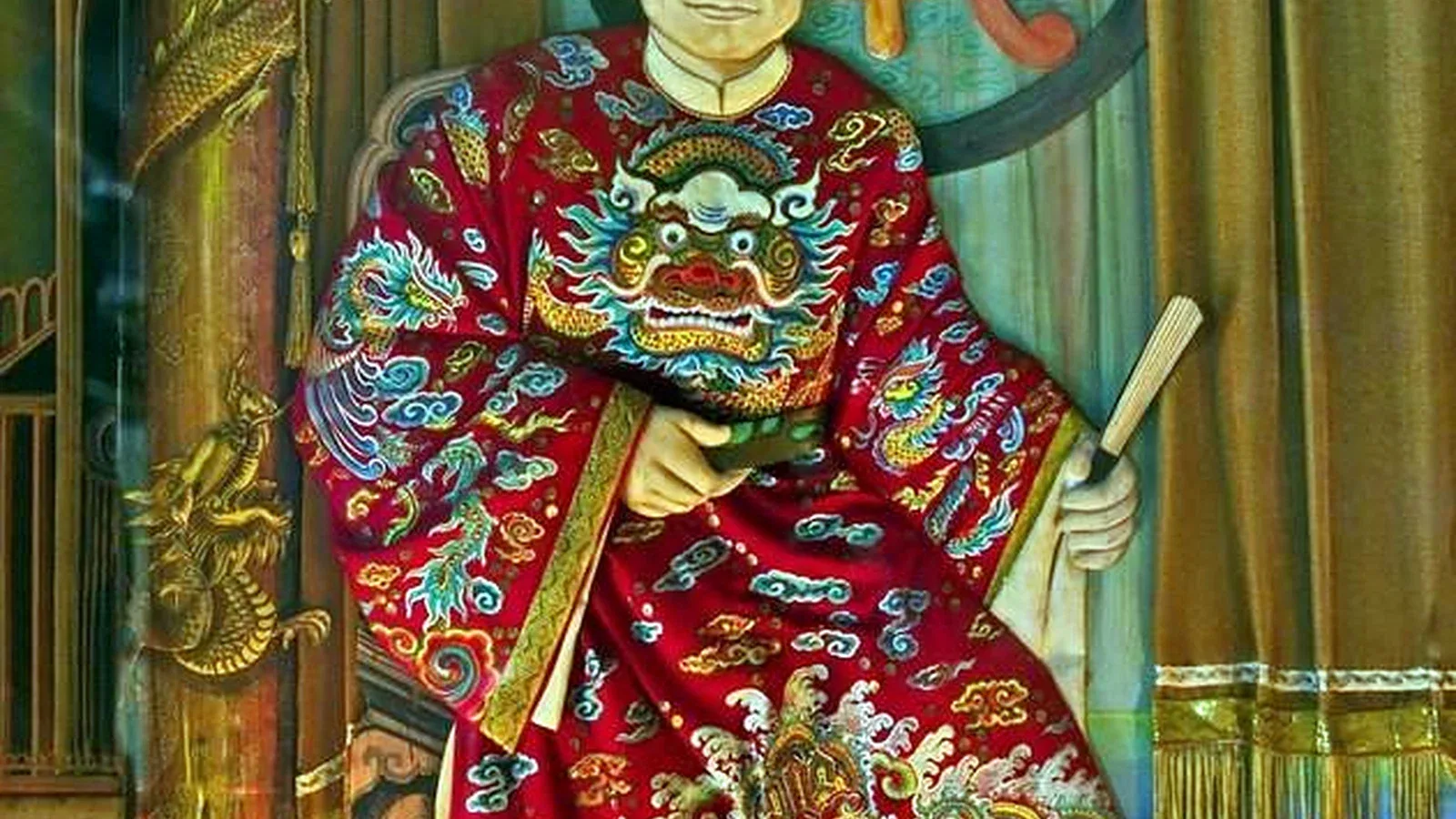
A walk into Lăng Ông Bà Chiểu is not only a visit to the tomb of Lê Văn Duyệt. It is one way to read the older memory of Gia Định inside the modern city.
If someone asked where old Gia Định still survives, most visitors would probably point towards Chợ Lớn, or perhaps towards the colonial buildings around District 1. Few would think of Bà Chiểu first. Yet if you walk through the traffic of Bình Thạnh, past the market streets and the restless roundabout, you eventually come to a walled compound shaded by old trees, where the noise of the city does not disappear so much as fall away. Lăng Ông Bà Chiểu is often described as the resting place of Lê Văn Duyệt, but that description is too narrow. The place is not only a tomb. It is one of the few corners of Ho Chi Minh City where Gia Định still feels present, not as a lesson from the past, but as a living memory folded into the neighbourhood.
The contrast begins before any history is explained. Outside the gate, Bà Chiểu is all movement: buses edging through traffic, scooters pouring around the intersection, vendors calling from the market, cafés spilling onto the pavement, apartment blocks rising behind older houses. Inside, the rhythm changes almost immediately. Large trees soften the heat. Incense drifts across the courtyard. Visitors lower their voices without being told to. Some arrive with flowers or fruit; others stop only briefly before continuing to work. The site does not feel arranged for tourists. It feels as though it still belongs to the people around it, which may be why locals continue to call it simply Lăng Ông — the Lord’s Tomb — rather than by a formal historical title.
That name matters. Official names record rank, office and dynasty, but familiar names reveal how a city actually remembers. Lê Văn Duyệt was a military commander, a trusted general of Emperor Gia Long and later the powerful governor of Gia Định, but those titles alone do not explain why his tomb remains one of the most visited historical sites in the city. Many officials held high office in nineteenth-century Vietnam. Few became part of everyday urban memory. To understand why this happened here, we have to look beyond the man and pay attention to the world around him: the frontier landscape of southern Vietnam, the migrant communities that built it, and the practical culture that made Gia Định different from the imperial capital in Huế.
Long before Ho Chi Minh City became a metropolis, this region was a landscape of rivers, wetlands, forests and scattered settlements connected more naturally by waterways than roads. Families from central Vietnam came south in search of land and opportunity, often bringing with them histories of hardship, displacement or ambition. Chinese merchants established commercial networks. Khmer communities remained part of the older landscape. Indian traders, missionaries, soldiers, craftsmen and migrants passed through or settled in the growing port. Gia Định was not built from one origin story. It became itself because many different people arrived, adapted and stayed.
Lê Văn Duyệt belonged naturally to that world. Born in 1764 into a family connected to the broader southward movement of Vietnamese settlers, he did not come from the polished world of court ritual. His early life belonged to the waterways and frontier settlements of the south, where reputation was earned less through ceremony than through courage, judgement and usefulness. Later historical accounts remember his rise through military service under Nguyễn Ánh, his role in the wars that led to the founding of the Nguyễn dynasty, and his eventual appointment as Tổng trấn Gia Định, with authority over a vast southern region. But inside Lăng Ông, those facts feel like only one layer of the story. What matters just as much is that the governor and the city seemed to fit each other.
The Gia Định that Lê Văn Duyệt governed was unlike Huế in almost every important respect. The imperial capital looked inward, towards hierarchy, ritual and the careful maintenance of dynastic authority. Gia Định faced the sea and the river system. Its prosperity depended on movement: of rice, goods, people, languages, beliefs and capital. A governor here could not think only like a court official. He had to think about canals, markets, settlement, security, trade and the unstable balance between openness and order. Contemporary descriptions portray Gia Định as commercially active, relatively secure and strikingly prosperous, with river traffic, crowded markets and a level of urban life that impressed outside observers.
This is where Lăng Ông begins to feel less like a memorial to one historical figure and more like a key to reading the city. Saigon has always seemed more comfortable with movement than permanence. People arrive from elsewhere, rent rooms, open shops, find work, build networks and begin again. The city rarely asks where someone came from before asking what they can do next. That quality did not begin in the twentieth century. It belongs to the older Gia Định, the frontier city that grew by absorbing newcomers and turning movement into urban life. Lê Văn Duyệt is remembered not simply because he governed the south, but because his style of rule came to symbolise a southern instinct: practical, commercially open, strict when necessary, and deeply tied to local order.
The story becomes more complicated after his death in 1832. Political tensions between Lê Văn Duyệt’s southern administration and the centralising vision of Emperor Minh Mạng did not disappear when the governor died. They intensified, especially after the rebellion led by his adopted son Lê Văn Khôi. Although Lê Văn Duyệt was already dead, his name became caught in the punishment that followed. His honours were stripped, his tomb was dismantled, and a stone recording his alleged crimes was placed where memory had once been honoured. Later, under Thiệu Trị and Tự Đức, the judgement was softened and then reversed; the tomb was restored, the site rebuilt, and official recognition gradually returned.
Yet when you walk through Lăng Ông today, very little of that political violence is immediately visible. What you notice instead is continuity. Incense keeps burning. People keep coming. During major ceremonies, especially the annual rituals associated with Lăng Ông, the compound fills with offerings, music, processions and performance. Hát bội still belongs naturally to this place, not as decoration for tourists, but as part of the ritual and cultural life surrounding the memory of Ông. The city did not preserve this place only because official history eventually changed its verdict. It survived because local memory continued to treat it as meaningful.
That is why the site can feel so different from many better-known landmarks in Ho Chi Minh City. It does not immediately explain itself. It does not present history as a sequence of plaques, dates and conclusions. You understand it slowly, by noticing how people behave inside the compound, how casually the sacred and the ordinary sit beside one another, how a market neighbourhood continues to move around a place that seems to belong to another century. A visitor who comes only to see the tomb of Lê Văn Duyệt may leave with a few facts. A visitor who stays longer begins to understand something more difficult to summarise: how Gia Định still survives beneath the speed and noise of modern Saigon.
This is also why the usual question — whether Lê Văn Duyệt should be remembered as a hero, a loyal servant, a regional strongman, or a controversial figure — feels too small for the place. Those debates matter, but Lăng Ông is not only about settling them. It is about observing how cities remember people whose lives cannot be reduced to clean categories. Official history can condemn, restore, rename and reinterpret. A city remembers differently. It remembers through habits, through names, through annual rituals, through the fact that people still cross a busy street in Bình Thạnh to light incense before a man who died nearly two centuries ago.
Lăng Ông belongs to that kind of memory.
For SaigonWalks, this is why Lăng Ông Bà Chiểu is not simply a historical stop. It is one of the places where the old southern capital becomes legible again. From here, Gia Định is no longer an abstract name from before Saigon and Ho Chi Minh City. It becomes a landscape of migration, trade, worship, theatre, political tension and local memory. It helps explain why this city still feels so open to newcomers, why its neighbourhoods often matter more than its monuments, and why the past here rarely stays still for long.