

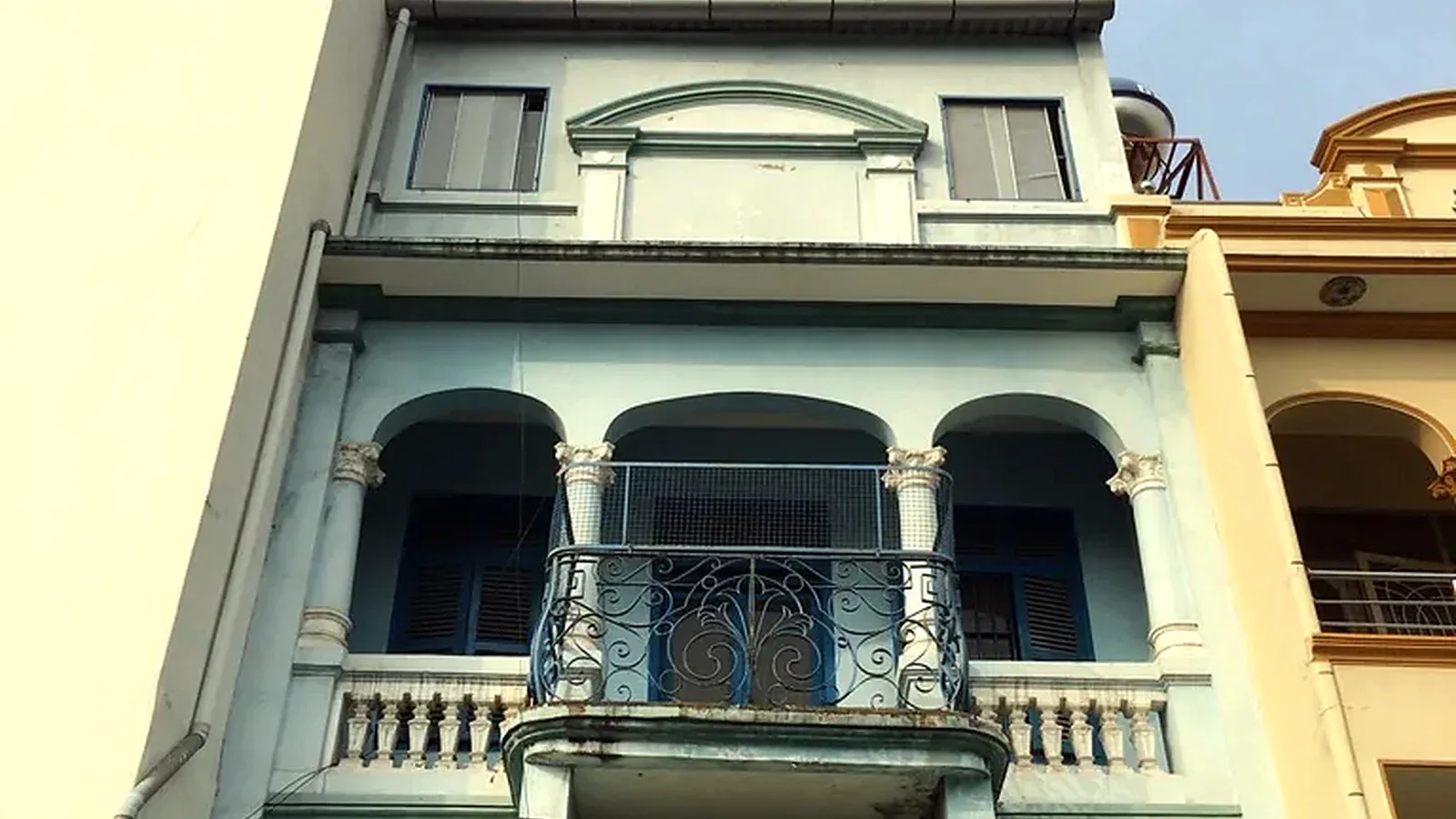
One of the easiest mistakes in Chợ Lớn is to judge the district by polish. Its older shopfronts often reveal something more useful: how business, family, memory and street life stay attached to place.
Chợ Lớn does not always present wealth in the way visitors expect. Some streets look worn. Some shopfronts seem unchanged for decades. Some houses carry old signage, patched surfaces, narrow entries and a density of objects that makes the building difficult to read at first glance.
It is tempting to treat this as decay. Sometimes it is. But in many cases, the more useful reading is continuity. A shopfront that has not been redesigned may still be serving the same customers, the same supplier network, the same family logic or the same street rhythm that made it viable in the first place.
Business does not always need spectacle
In more image-driven parts of the city, renovation often signals status. In Chợ Lớn, the relationship between business and appearance can be different. The important thing may be reliability, location, reputation, stock, supplier relationships and the trust built across years of transactions.
That is why an old frontage should not be dismissed too quickly. The building may look modest, but the business behind it may be specialized, efficient and deeply embedded in a network of customers who already know why they come. The street does not need to explain itself to every passerby.
The house and the shop are not fully separate
Shophouses also complicate the boundary between domestic life and commerce. A narrow building may hold storage, selling space, family rooms, ancestral memory and daily routines in one vertical structure. The street-facing ground floor is not merely retail space. It is the public edge of a household economy.
This helps explain why change can feel conservative in older commercial districts. Layout, frontage, counters, storage and customer flow are not just design choices. They are habits accumulated over time. Altering them can mean disrupting the way the business actually works.
What visitors should notice
Look at thresholds. Notice where the shop ends and the home begins, if it ends at all. Notice how goods are stacked, how signs are layered, how older materials remain in use, and how people move through narrow space without needing to negotiate every step verbally.
In Chợ Lớn, a street can appear chaotic because it contains many systems at once: selling, storage, delivery, worship, eating, resting, repair, conversation and family life. The point is not to romanticize old buildings. The point is to recognize that visual polish is not the only measure of urban intelligence.
This is one reason Chợ Lớn rewards slow walking. The district’s value is often not hidden. It is visible, but only if the visitor stops expecting the city to announce itself through clean surfaces.