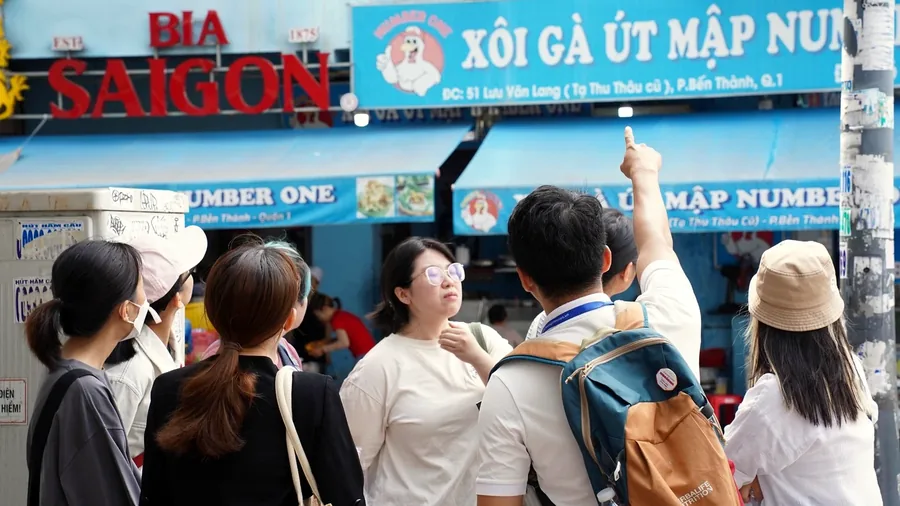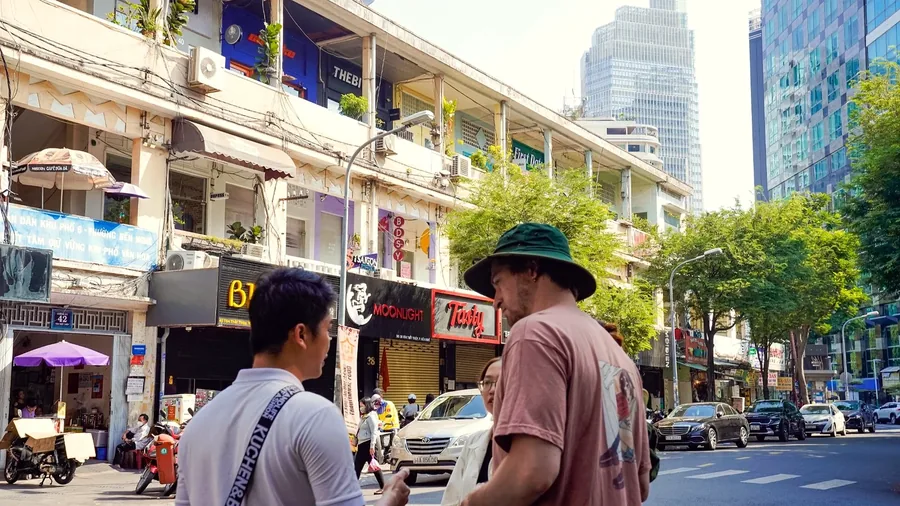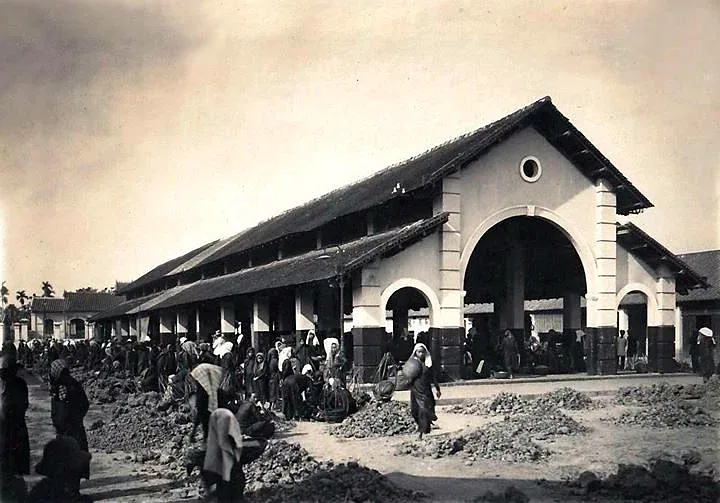

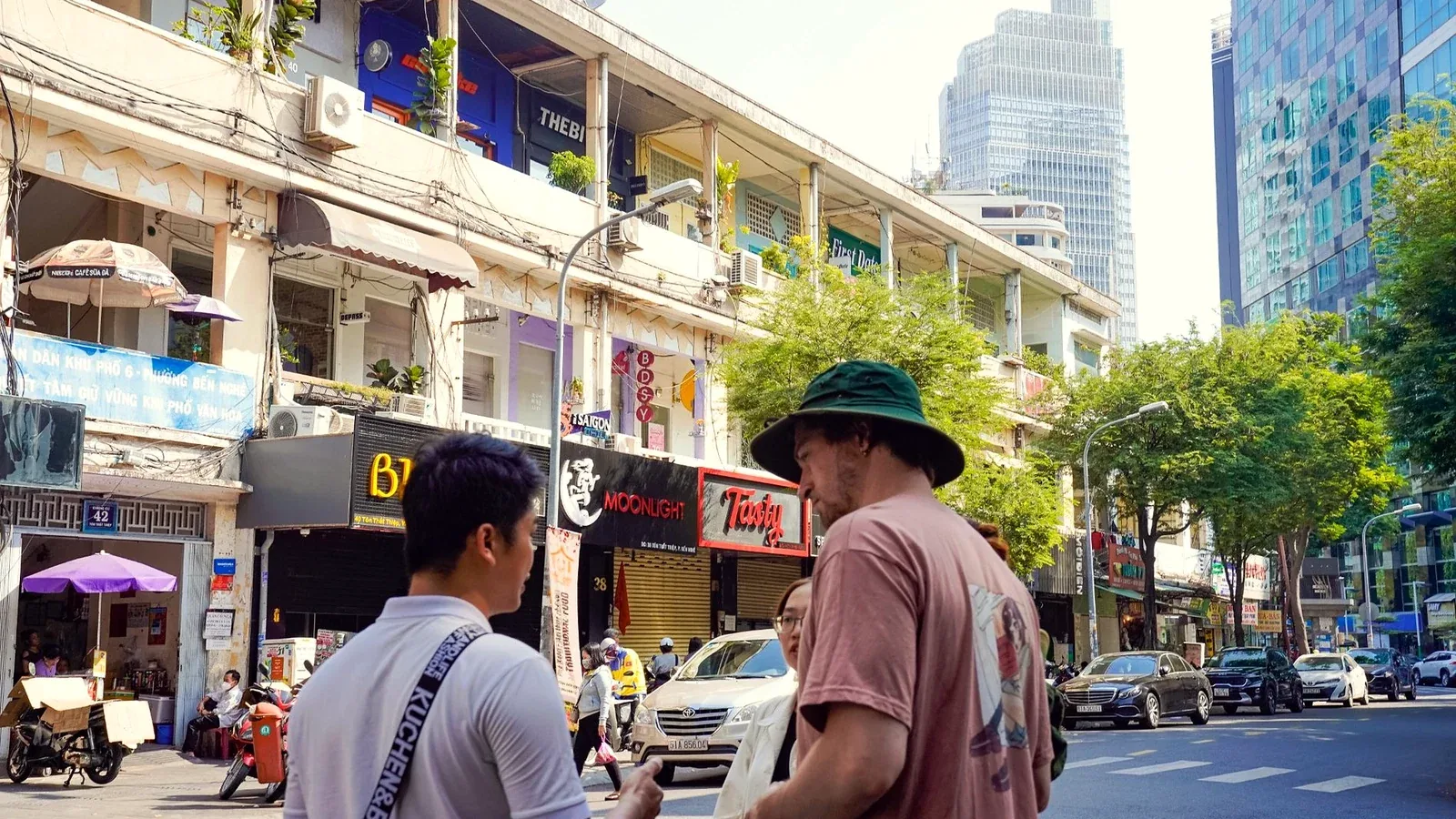
Cars make the city look like traffic. Walking reveals the negotiations that make it work.
A car is useful in Saigon when distance matters. It protects you from heat, rain and the exhausting friction of moving across a large city. It also removes the very things that explain the place.
From the back seat, Saigon can look like an argument with no grammar. Motorbikes press around buses. Vendors appear at the edge of traffic. Shopfronts open straight onto the road. People eat, bargain, pray, repair, unload and wait in spaces that a cleaner urban plan would separate. The view is busy, but strangely flat. Everything becomes traffic.
On foot, the same scene changes scale. You begin to see that the city is not simply moving too fast. It is constantly reading itself. A rider adjusts to a pedestrian before either person has fully stopped. A vendor knows which customer is coming before the order is spoken. A stool is moved because shade has shifted. A shrine at a shopfront receives a quick gesture before business begins. These are not postcard details. They are operating instructions.
The street is not the space between destinations. In Saigon, it is often the lesson.
This is why walking matters for anyone trying to understand Saigon beyond attractions. It does not make the city quaint. It makes the city legible. The street is where private life, commerce, heat, appetite and belief negotiate space in real time.
Educators often look for case studies in formal sites: museums, monuments, institutions, planned districts. Saigon offers those, but its strongest lessons often sit between them. The route to the market matters. The alley beside the temple matters. The way a family business occupies the threshold between house and street matters. These are small observations, but they point to larger systems: informality, density, adaptation, social trust, climate, migration and everyday governance.
A car turns these systems into scenery. A walk slows them down enough to be discussed. Not completely. Saigon resists complete explanation, and it should. But street-level movement gives the observer a better question: not whether the city is orderly, but what kind of order is being produced in motion.
That is the field method behind SaigonWalks. We do not walk because walking is romantic. We walk because the city explains itself badly through glass.