

Ba Lù is not only a coffee stop. It is a way to sit inside Chợ Lớn’s morning movement and notice how coffee belongs to street life.
Racket coffee is not a branding invention. It is a working technique, made with cloth filters, hot water, patience and a taste profile that belongs to older Saigon coffee shops.
At Ba Lù, the attraction is not polish. It is continuity: the repeated motion of brewing, the dark roast, the small cups, the regulars, and the corner of Chợ Lớn where coffee is part of a neighbourhood’s morning machinery.
Coffee in the middle of movement
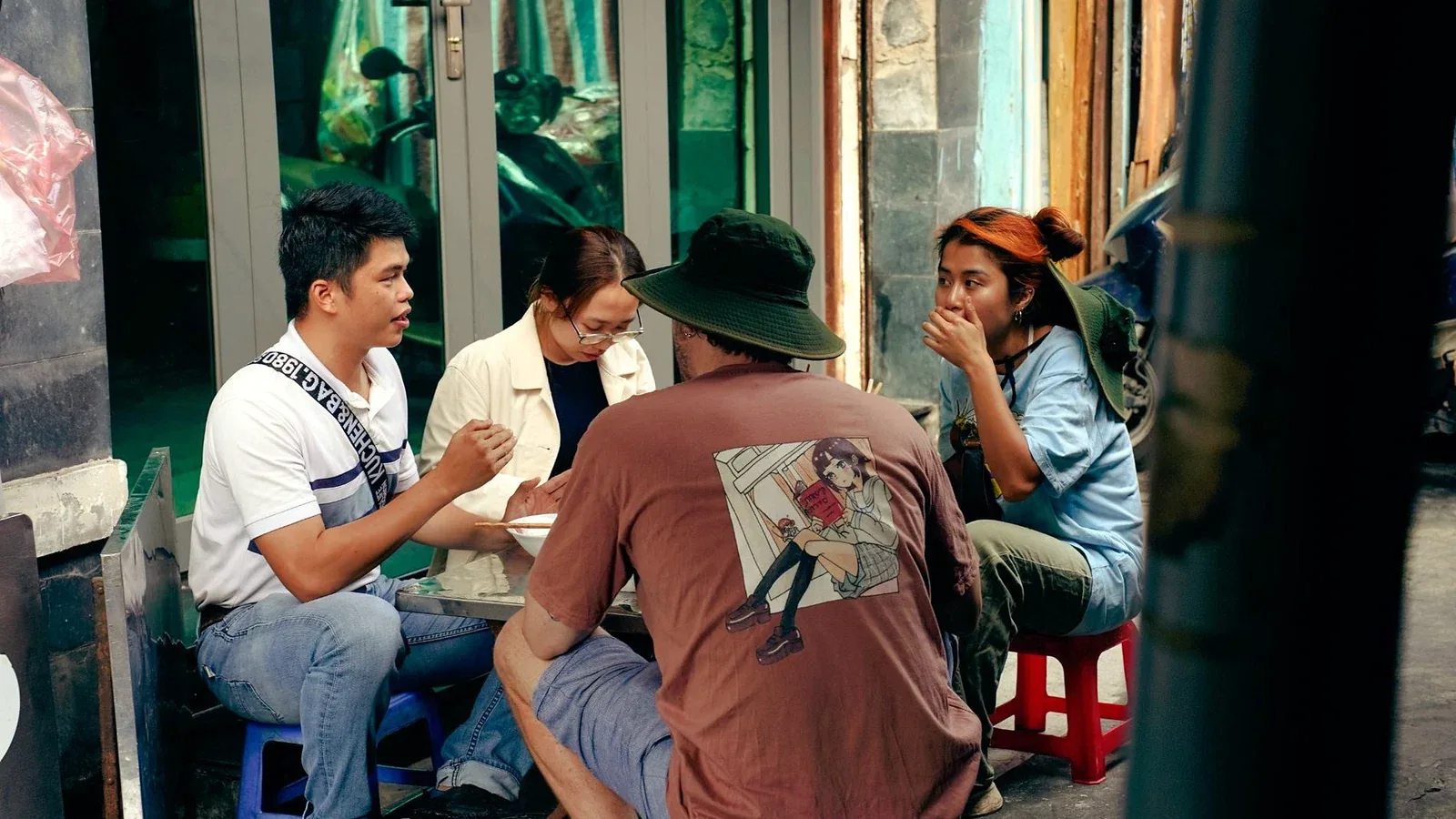
The setting matters. Ba Lù is not the kind of place where you sit apart from the city in a quiet, designed room. You drink coffee while the market keeps moving around you. People pass, buy, call out, deliver, wait and return to their routines. The cup is only one part of the experience.
That is what makes the stop useful on a walk. It shifts the idea of coffee away from lifestyle design and back toward neighbourhood rhythm. You are not consuming an atmosphere that has been arranged for you. You are sitting inside one that already works.
Friendliness without performance
There is also a kind of direct friendliness in places like this. The vendor does not need to turn the shop into an explanatory performance. The welcome is in the ease of service, the repeated habit, the tolerance of a curious visitor who is willing to sit properly inside the morning rather than treat it as a backdrop.
For travellers who only know Vietnamese coffee through condensed milk and Instagram cafés, Ba Lù resets the frame. Saigon coffee is also labour, equipment, heat, smoke, timing and a shop that has no need to explain itself too much.
Ba Lù works best as part of a wider Chợ Lớn route, where coffee, temples, shophouses and food stops are read together rather than isolated into separate attractions.
Ba Lù also belongs to a larger Chợ Lớn reading: migration and institutions , old shophouses and the way street life keeps commercial memory visible.