

Mark found the walk fascinating and praised the guide.
Mark · Viator · March 2026
A walk through the historic core of Saigon’s Chinatown — assembly halls, temples, shophouses, foodways, street life and the Chinese-Vietnamese institutions that shaped the city.
Plan your walk
USD 120 total for 2 adults · USD 75 for 1 adult
Adult examples for the shared format. Select your date and group for the final total, including child rates or the private option.
This route moves through the historic core of Chợ Lớn, where temples, assembly halls, shophouses, street food, clan networks and Catholic memory sit within a few dense blocks. The point is not to collect landmarks. The point is to understand how Chinese-Vietnamese communities organised belief, trade, mutual support, public life and neighbourhood identity over generations.
The walk also places Chợ Lớn inside a larger Southeast Asian story. Chinese migration across the region was never only about movement from one country to another. It involved ports, dialect groups, merchant networks, religious institutions, political change, family strategies and commercial adaptation. In Chợ Lớn, those large historical forces remain visible at street level.
The route begins with community institutions and moves into the street: assembly halls, temple courtyards, old shophouse blocks, coffee, breakfast, market edges and Catholic memory. Each stop opens a different way of reading Chợ Lớn as a place shaped by dialect groups, worship, commerce and everyday life.
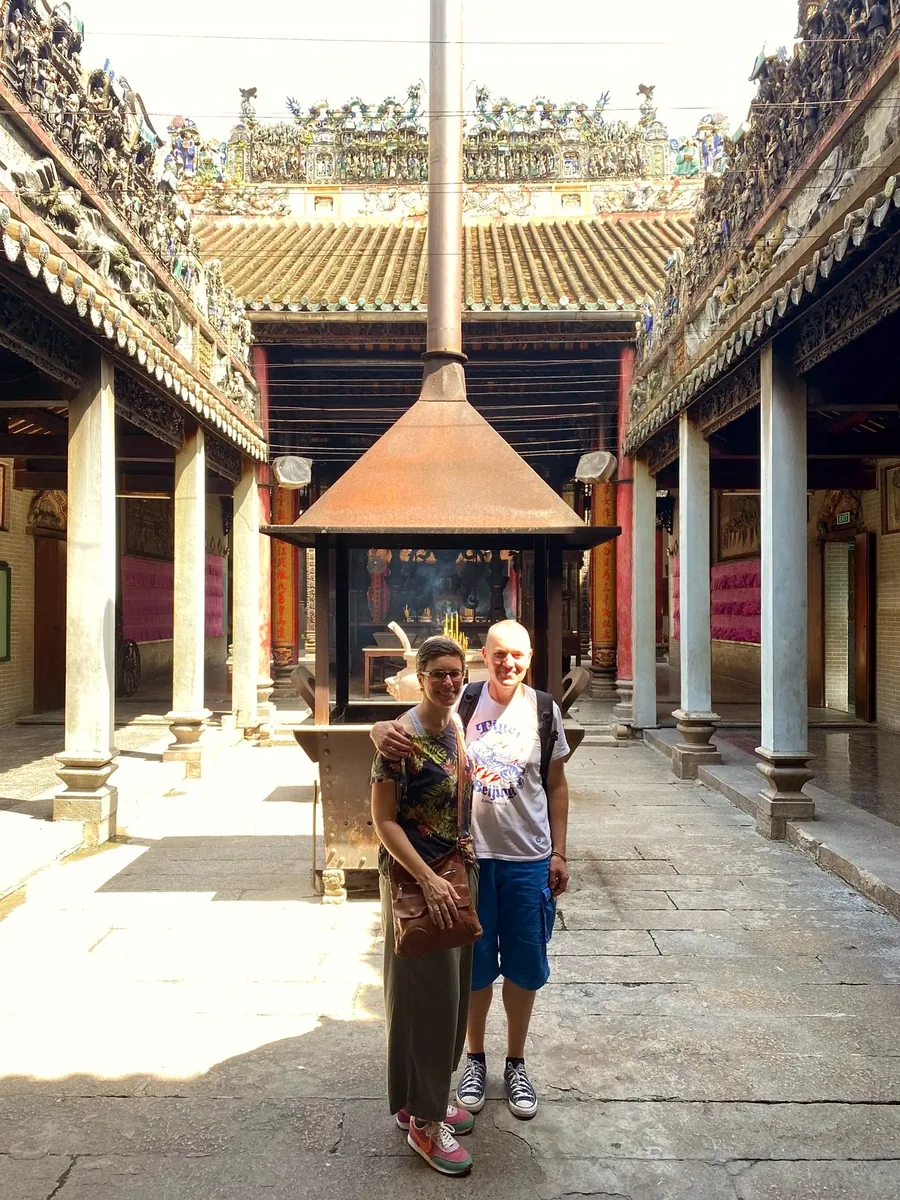
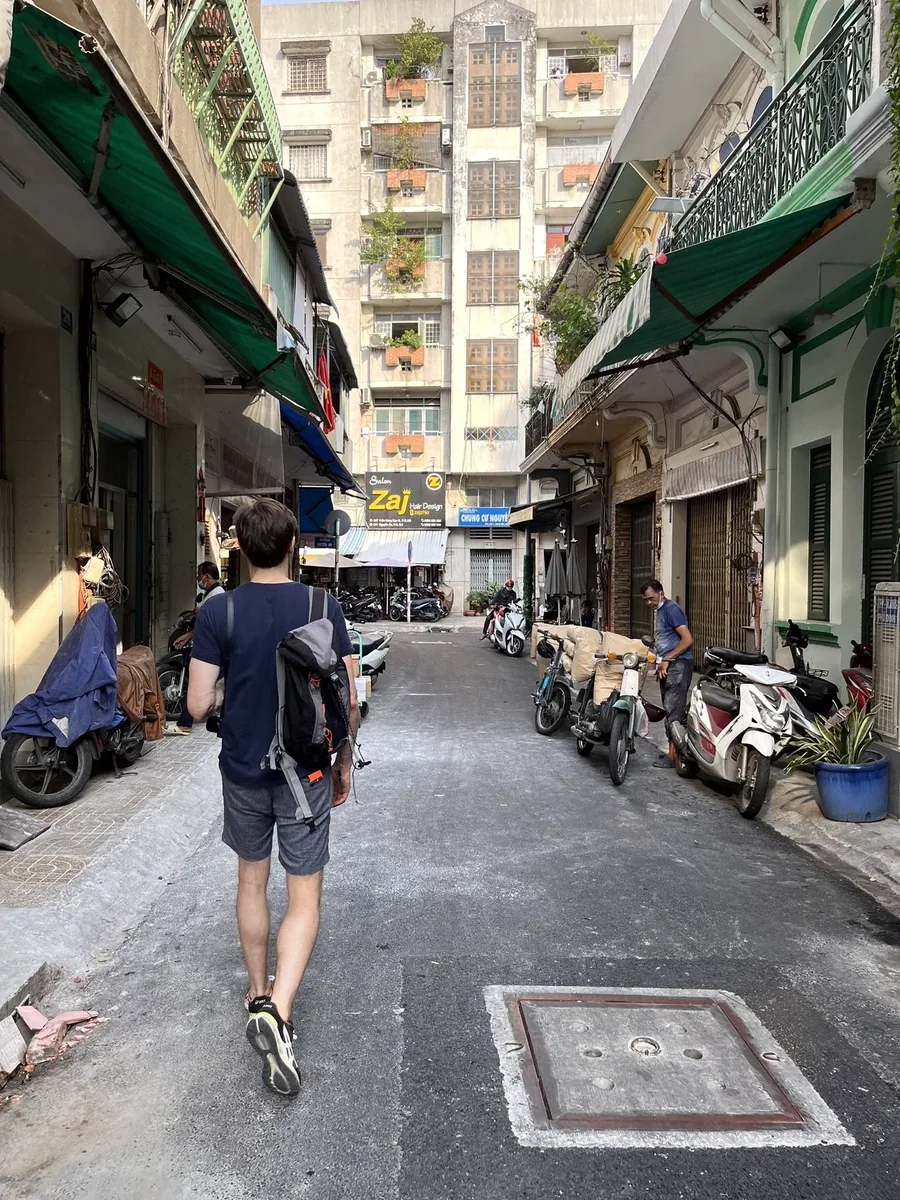
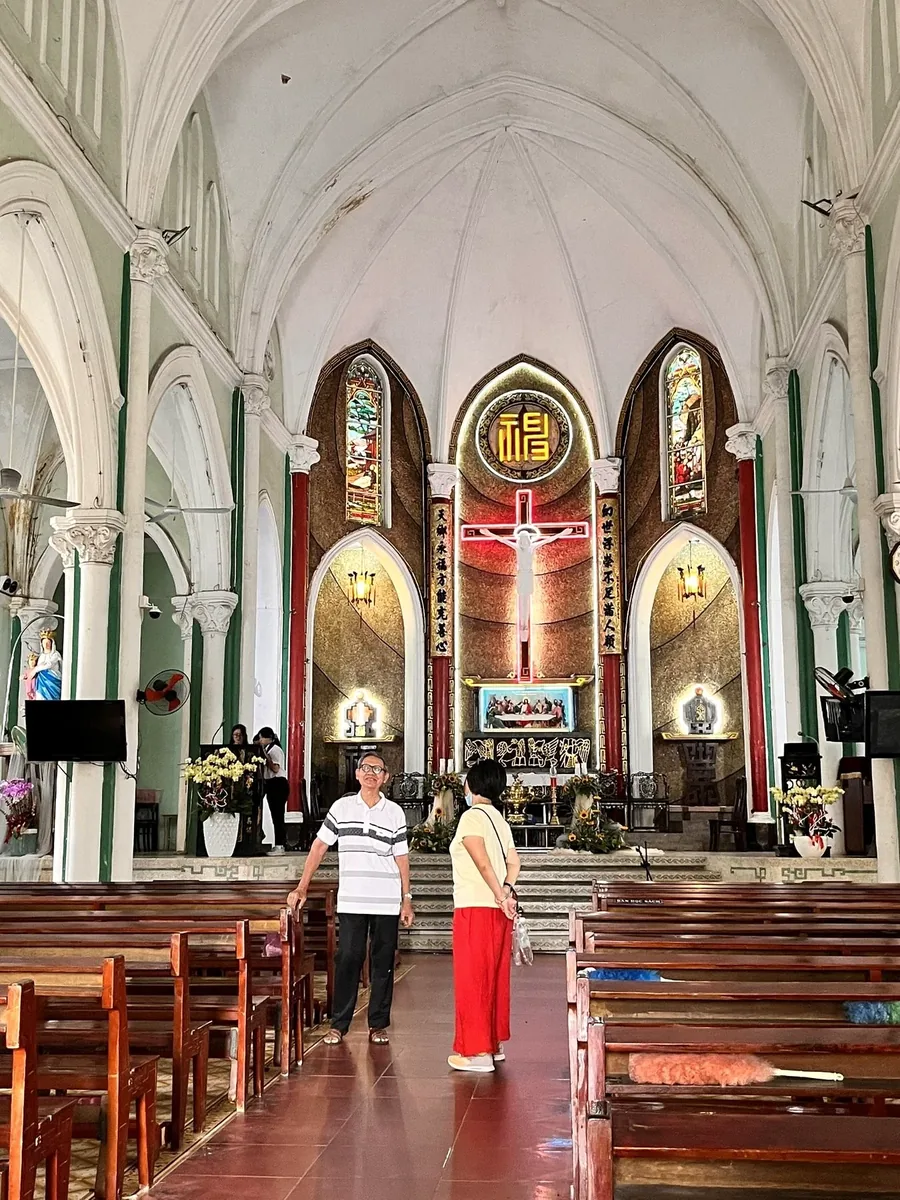
Chợ Lớn is often flattened into “Chinatown,” but the area is more precise and more interesting than that label suggests. It is a district of Teochew, Cantonese, Fujian and other Chinese-Vietnamese histories, each leaving marks in worship, food, architecture, commerce and neighbourhood organisation.
For educators, groups and travel partners, this route can work as a field module on migration, diaspora, Southeast Asian urban history, religious institutions, minority communities, street life and the social structure behind everyday commerce.
These walks are best treated as starting points. For groups, families, educators or travel partners, the pacing and emphasis can be adjusted around timing, interests and group profile.
What travellers say
The reviews point to the same strengths: a knowledgeable guide, a route beyond the usual tourist circuit, and a richer understanding of Chinese-Vietnamese life in Chợ Lớn.
Mark found the walk fascinating and praised the guide.
Mark · Viator · March 2026A less-touristy walk with temples, markets, food and genuine interaction with the neighbourhood.
Shelly · Viator · November 2024“One of the most exciting experiences” of the trip, led with care, knowledge and humour.
Andy · Viator · October 2023Next step
Choose your date and group size and book directly with SaigonWalks. Confirmation is sent by email after payment.